The origins of DJing
From the phonograph and gramophone to Jamaican sound systems and the first discotheques, how playing records became a craft of its own.
Recorded sound arrives
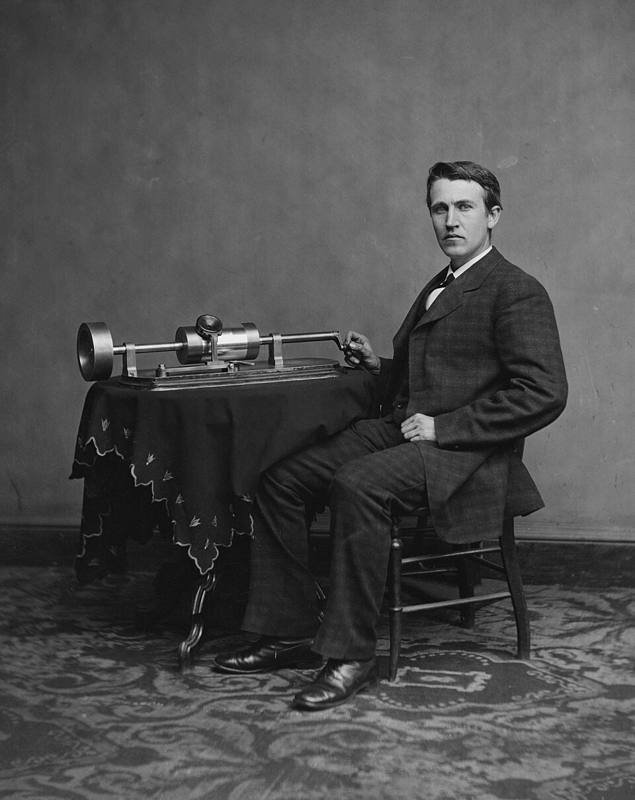
DJing depends on recorded music, so the story starts in 1877, when Thomas Edison demonstrated the phonograph, which recorded sound on a cylinder. About a decade later Emile Berliner developed the gramophone, which played flat discs. Discs were easier to mass produce and store than cylinders, and by the early twentieth century they had won. The flat record is the direct ancestor of every DJ's vinyl.
Early discs spun at around 78 RPM and held only a few minutes per side. In 1948 Columbia introduced the 33 1/3 RPM long-playing record (LP), and in 1949 RCA Victor introduced the 7-inch 45 RPM single. Those two speeds are still the standard on DJ turntables today.
Playing records for an audience
Once records could be amplified, people began playing them for groups instead of hiring live bands. Several threads developed in parallel:
- Radio. From the 1920s and 1930s, radio presenters began building shows around recorded music. See radio DJs.
- Jukeboxes. Coin-operated record players filled diners and bars from the 1930s onward, giving people control of the playlist for a coin.
- Dance halls and clubs. In 1940s Paris, small clubs began playing records instead of hiring bands. The French word discotheque, meaning "record library," came to describe these venues.
Jamaica's sound systems
Some of the most important DJ innovations came from Jamaica. From the 1950s, operators in Kingston built mobile sound systems: large hand-built speaker stacks, powerful amplifiers and a selection of records, set up for outdoor dances. Rival systems competed for crowds with louder sound and rarer records.
Sound system culture introduced ideas that shaped global DJing:
- The selector, who chose the records.
- The deejay or toaster, who talked, chanted and rhymed over the music. In Jamaica, "deejay" often means the vocalist rather than the person playing records.
- Exclusive records, called dubplates, cut specially for one sound system.
- Versions and dub, instrumental B-sides that producers remixed with echo and reverb, giving deejays space to perform.
These traditions traveled with Jamaican migrants to New York and London. In the Bronx, a Jamaican-born DJ named Kool Herc brought sound system thinking to block parties. Read Kool Herc and the birth of hip hop.
From selecting to mixing
For decades, playing records mostly meant selecting them and talking between songs. The leap to continuous mixing came in the late 1960s and 1970s in New York nightclubs, where DJs began overlapping records to keep dancers moving. That story continues in disco and the club DJ.
Timeline
| Year | Moment |
|---|---|
| 1877 | Edison demonstrates the phonograph |
| Late 1880s | Berliner's gramophone plays flat discs |
| 1920s to 1930s | Radio presenters build shows around records |
| 1948 | 33 1/3 RPM LP introduced |
| 1949 | 45 RPM single introduced |
| 1950s | Jamaican sound systems grow in Kingston |
| Late 1960s | New York club DJs begin continuous mixing |
| 1973 | Kool Herc's Bronx party, often cited as hip hop's birthday |
The large hole in a 7-inch single was designed for jukeboxes and automatic record changers, which could grab and drop the discs more easily. DJs still use adapters to play them on standard spindles.