The turntable as an instrument
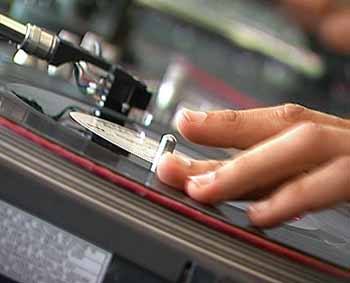
How scratch DJs turned a playback machine into an instrument, from the Technics 1200 and DJ battles to turntablism crews and digital vinyl.
A machine built for listening
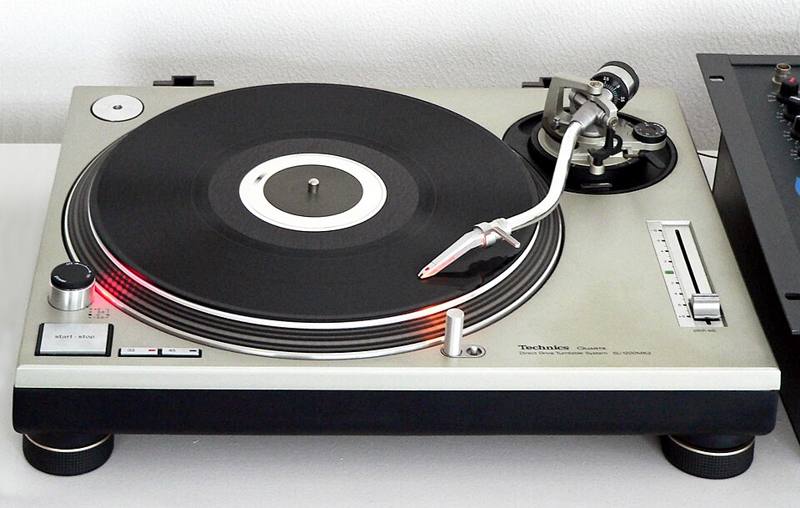
Turntables were designed to play records faithfully, not to be pushed, pulled and stopped by hand. What made DJ techniques possible was a particular kind of turntable: direct drive, with a strong motor under the platter. Japanese manufacturers led the way, and the Technics SL-1200, first released in 1972, became the classic. Its 1979 MK2 version added a smooth pitch slider with a center lock and proved tough enough to survive years of club use. See DJ turntables explained.
From playing records to playing the turntable
In the Bronx, DJs like Kool Herc, Grandmaster Flash and Grand Wizzard Theodore discovered that the record itself could be manipulated: looped, cut and scratched. See Kool Herc and the birth of hip hop. By the early 1980s, scratching appeared on hit records. Herbie Hancock's 1983 track "Rockit," featuring scratches by Grand Mixer D.ST (later known as Grand Mixer DXT), introduced the sound to a huge audience.
DJ battles
Competitions gave scratch DJs a stage. The DMC World DJ Championships began in the mid 1980s and became the best-known battle in the world. Routines are judged on skill, creativity, originality and crowd response, usually within strict time limits. Battles pushed the art forward quickly:
- Beat juggling, using two copies of a record to rearrange drum patterns into new rhythms.
- Body tricks, such as scratching behind the back, for showmanship.
- Complex scratch combos, built from the flare, transform and chirp.
The word "turntablism"
In the 1990s, the term turntablism came into use to describe the turntable played as a musical instrument. It is often credited to DJ Babu of the Beat Junkies. Crews such as the Invisibl Skratch Piklz in the San Francisco Bay Area and the X-Ecutioners in New York performed as turntable bands, with each DJ playing a role like bass, drums or lead.
Tools that grew from turntablism
| Tool | What it did |
|---|---|
| Battle mixers | Light, fast crossfaders with curve control |
| Battle records (breaks records) | Collections of drum breaks and scratch sounds |
| Straight tonearms | Better skip resistance |
| Crossfader-focused techniques | Precise cuts and rhythmic sounds |
| Digital vinyl systems | Scratch any digital file with real vinyl feel |
The digital era
In the 2000s, digital vinyl systems such as Serato's and Traktor's let DJs scratch digital files using timecode records. This kept the turntable relevant even as DJs stopped carrying crates of vinyl. Later, media players and controllers added large, touch-sensitive jog wheels capable of scratching.
Technics paused production of the SL-1200 line in 2010 and revived it in 2016, a sign of the continuing demand for turntables. Today many brands make direct-drive decks, and turntables remain the instrument of choice for scratch DJs.
Why it matters
Turntablism showed that DJs could be musicians, not only selectors. It influenced hip hop production, electronic music, live bands and even film soundtracks. And it continues to evolve through online battles, controllerists and finger drummers who blend turntable ideas with pads.
Many music schools and community programs now teach turntablism. The skills it trains, timing, coordination and listening, transfer to any kind of DJing.
Ready to try? Start with the baby scratch.