Pitch, key lock and key shifting
Changing a track's speed also changes its pitch unless key lock is on. Learn the semitone math, when to use key lock or master tempo, and how key shifting helps harmonic mixing.
Speed and pitch go together
On a turntable, playing a record faster makes the music higher in pitch, and slower makes it lower. That is simple physics: the sound waves are compressed or stretched. Digital players behave the same way by default.
For DJs, this means that every time you move the pitch fader to match tempos, you also change the track's key slightly.
The semitone rule
A semitone is the smallest step between notes in Western music. Raising pitch by one semitone means increasing speed by about 5.95%, usually rounded to 6%.
| Speed change | Pitch change |
|---|---|
| +1% | about 0.17 semitones |
| +3% | about half a semitone |
| +6% | about 1 semitone |
| +12% | about 2 semitones |
| -6% | about 1 semitone down |
Small changes under about 3% are rarely noticeable on their own. But in harmonic mixing, even half a semitone can make two tracks sound slightly out of tune together.
Key lock (master tempo)
Key lock, called master tempo on some players, uses time-stretching to change speed without changing pitch. The software or hardware processes the audio in real time to keep the original key.
| Key lock off | Key lock on | |
|---|---|---|
| Pitch follows tempo | Yes | No |
| Sound quality | Natural | Very good for small changes, can get artifacts at large changes |
| Vocals | Chipmunk or slowed effect at big changes | Stay natural-sounding |
| Scratching | Expected behavior | Can sound odd |
Most DJs keep key lock on for small and medium tempo changes and turn it off for scratching or when they want the classic vinyl effect.
Artifacts to listen for
Time-stretching works well for changes of a few percent. At larger changes you may hear:
- A metallic or watery sound on vocals.
- Smeared transients on drums.
- Pumping or phasing effects.
If you hear these, choose a closer-tempo track or use a transition that avoids a long blend.
Key shifting
Many DJ programs and players also offer key shift or key adjust, which changes the key without changing tempo. This can move a track one semitone up or down to match the next track's key.
- One semitone usually sounds natural.
- Two or more semitones can sound artificial, especially on vocals.
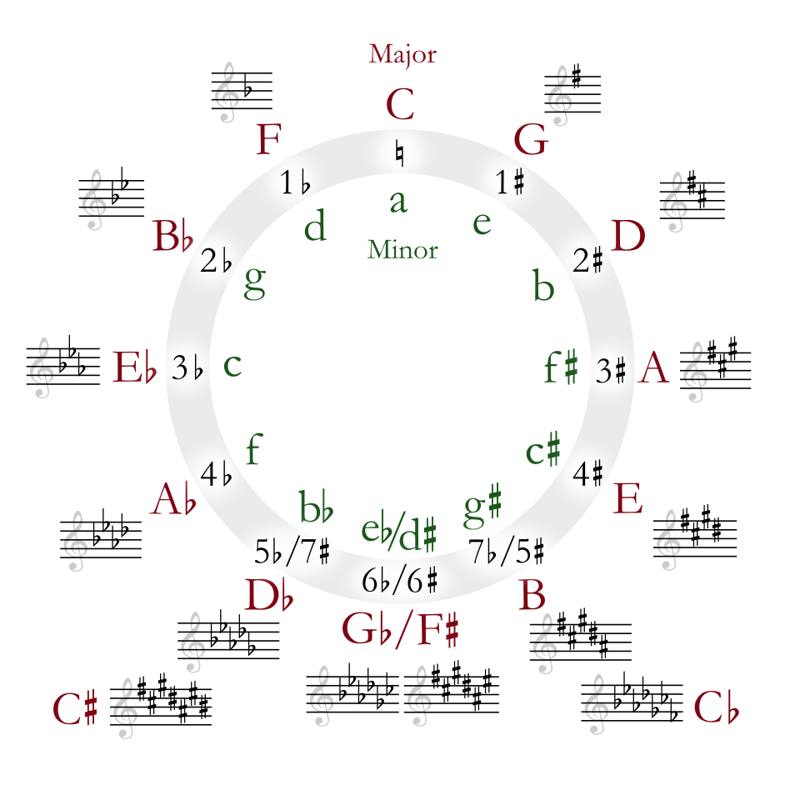
- On the Camelot wheel, moving up one semitone moves you 7 steps around the wheel, so a semitone shift is a big harmonic change, not a small one.
Practical workflow
- Turn on key lock for most mixing.
- Check both tracks' keys in your software.
- If the keys clash, consider whether a key shift of one semitone fixes it.
- If not, pick a different track or use a quick transition.
- Always confirm with your ears.
Vinyl players
Turntables have no key lock. Vinyl DJs either accept the pitch change, choose tracks close in tempo, or use DVS software that adds key lock. See the vinyl revival.
Try a blend with key lock on and off at +5% to hear the difference. Once you know how each sounds, you will know which to use.