Harmonic mixing and the Camelot wheel
How to mix tracks in compatible keys using the Camelot wheel, with the full key chart, safe moves and energy-boost tricks.
What harmonic mixing is
Every melodic track is written in a musical key. When you blend two tracks in keys that do not fit, the chords and melodies clash and the transition sounds sour, even if the beats are perfectly matched. Harmonic mixing means choosing tracks whose keys are compatible, so blends sound smooth and musical.
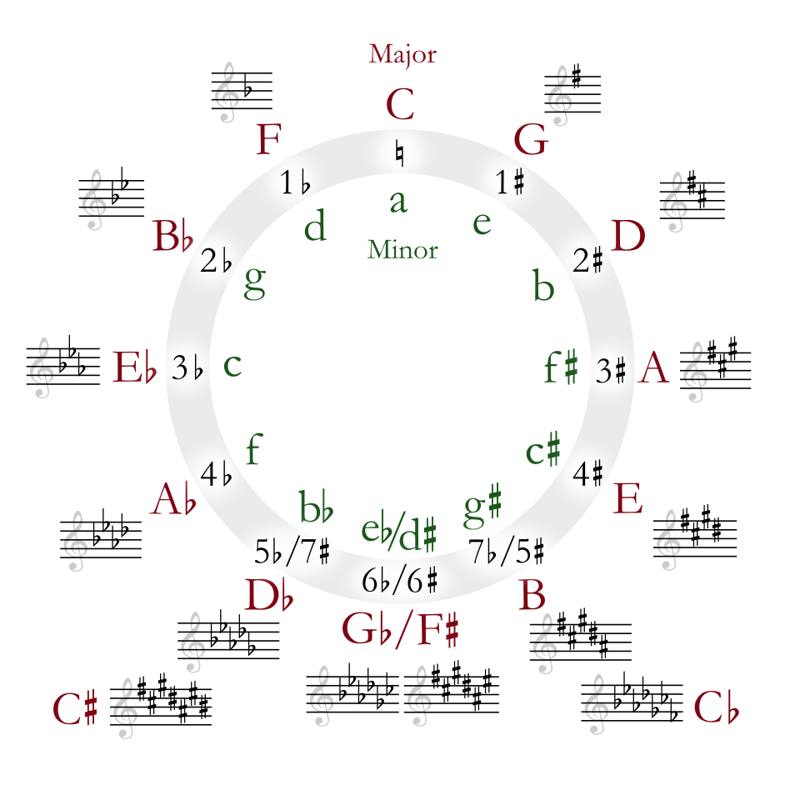
You do not need music theory to do this. The Camelot wheel, developed by DJ Mark Davis and popularized through the Mixed In Key software, turns the circle of fifths into a simple number system. For the theory underneath, read musical keys for DJs.
How the Camelot wheel works
Each key gets a number from 1 to 12 and a letter:
- A = minor keys.
- B = major keys.
Compatible moves from any key:
- Same code. 8A to 8A. Perfect match.
- One step up or down. 8A to 7A or 9A. Smooth.
- Switch letter, same number. 8A to 8B, the relative major or minor. Changes the mood but stays in harmony.
The full chart
| Camelot | Minor key | Camelot | Major key |
|---|---|---|---|
| 1A | A-flat minor | 1B | B major |
| 2A | E-flat minor | 2B | F-sharp major |
| 3A | B-flat minor | 3B | D-flat major |
| 4A | F minor | 4B | A-flat major |
| 5A | C minor | 5B | E-flat major |
| 6A | G minor | 6B | B-flat major |
| 7A | D minor | 7B | F major |
| 8A | A minor | 8B | C major |
| 9A | E minor | 9B | G major |
| 10A | B minor | 10B | D major |
| 11A | F-sharp minor | 11B | A major |
| 12A | D-flat minor | 12B | E major |
The wheel wraps around, so 12A is next to 1A.
Energy moves
Some DJs use specific jumps to change the feel:
- +1 (for example 8A to 9A): a gentle lift.
- +2: a bigger lift that can still work with sparse tracks.
- +7: equivalent to moving up one semitone, a classic energy boost often heard in pop key changes. Use it with a quick transition.
- Minor to major (A to B): brighter mood. Major to minor darkens it.
Getting key information
Most DJ software detects keys automatically and can display them in Camelot or standard notation. Detection is good but not perfect, especially on tracks with few melodic parts or with key changes. Trust your ears when a "compatible" pair still clashes.
Key lock and pitch
When you speed a track up on the pitch fader, its key rises too. About a 6 percent change in speed equals one semitone, which moves a track 7 steps on the Camelot wheel. Key lock (also called master tempo) keeps the original key while changing tempo, though extreme changes can add artifacts. Read pitch and key for the math.
When to ignore the wheel
- Drum-heavy tracks with little melody mix fine in almost any key.
- Quick cuts and echo outs never overlap long enough to clash.
- Track selection matters more. A great track in a "wrong" key often beats a dull track in the right one.
Build playlists that move around the wheel gradually: 8A, 8A, 9A, 9B, 10B. You get smooth blends and a slowly rising mood across a set.
Harmonic mixing pairs naturally with transitions like the acapella blend, where vocals sit over another track's music.