Needles and cartridges
How a phono cartridge turns grooves into sound, spherical vs elliptical styli, tracking force, and how to make needles and records last.
Needle, stylus and cartridge
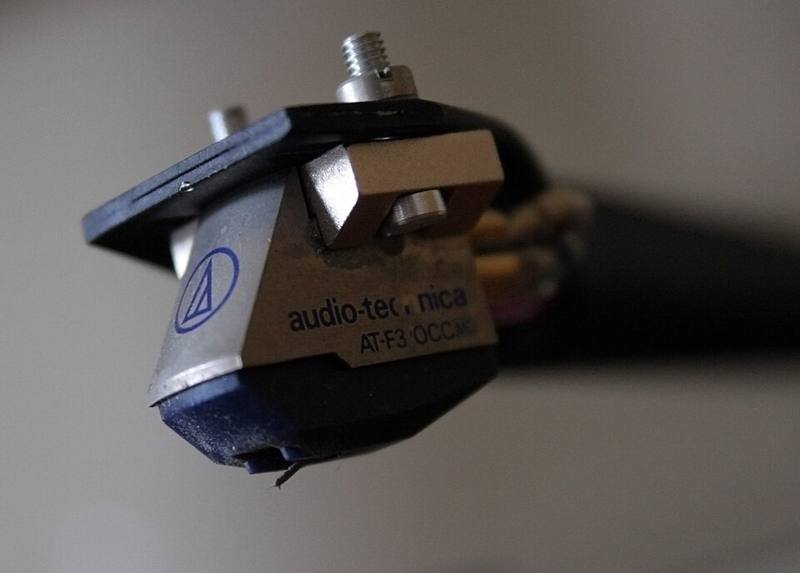
People say "needle," but the parts have different names:
- The stylus is the tiny diamond tip that sits in the groove.
- The cantilever is the thin arm that holds the stylus.
- The cartridge is the body that turns the stylus's vibrations into a small electrical signal.
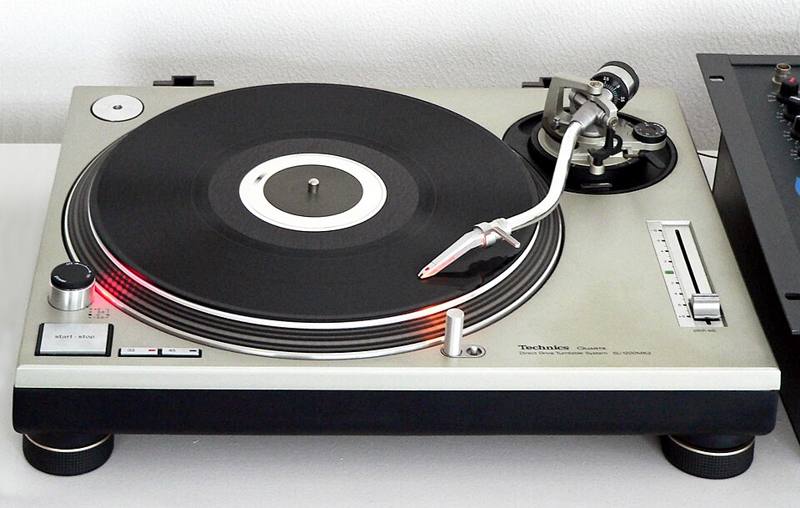
- The headshell is the removable piece that holds the cartridge and plugs into the tonearm.
Most DJ cartridges are moving magnet designs. The stylus moves a small magnet near coils, producing a signal that the mixer's phono input amplifies. Many DJ cartridges are built as one piece with an integrated headshell, so they slide straight onto the tonearm.
Stylus shapes
| Shape | Groove contact | Strengths | Trade-offs |
|---|---|---|---|
| Spherical (conical) | Small round contact | Robust, skip resistant, handles back-cueing | Less fine detail |
| Elliptical | Narrow contact on groove walls | More detail and high-frequency clarity | Less forgiving of rough handling |
| Fine line and other advanced shapes | Very narrow contact | Excellent detail for listening | Not designed for scratching |
Scratch DJs nearly always use spherical styli. Club DJs who mostly blend sometimes choose elliptical for better sound. Home listeners lean toward elliptical and finer shapes.
Tracking force
Tracking force is how hard the stylus presses into the groove, measured in grams. DJ cartridges usually track heavier than hi-fi cartridges, often in the range of a few grams, because extra weight helps them stay in the groove when the record is pushed and pulled. Always start with the manufacturer's recommended range.
To set it:
- Set the anti-skate dial to zero and the counterweight's number ring loosely.
- Turn the counterweight until the tonearm floats level in the air. This is zero balance.
- Without moving the weight, rotate only the number ring to zero.
- Turn the whole counterweight until the ring shows your target force.
- Use a stylus force gauge if you want to confirm.
Piling coins on the headshell is a good fix for skipping. Fact: It wears records and styli fast. Fix skipping by leveling the deck, isolating it from vibration and setting force and arm height properly.
How long does a stylus last?
There is no single number. Manufacturers often give an estimate in hundreds of hours of play for DJ styli, but heavy scratching, dirty records and excess force shorten that. Signs of a worn stylus include dull highs, distortion on loud passages and more skipping. Replacement styli are available for most popular cartridges.
Industry changes
Cartridge makers come and go. Shure, once one of the best known names in DJ cartridges, stopped making phono cartridges in 2018. Ortofon, Audio-Technica, Reloop and others continue to make DJ cartridges, so replacement parts for mainstream models are easy to find.
Caring for records and needles
- Hold records by the edges and label.
- Clean records with a carbon-fiber brush before playing.
- Clean the stylus gently from back to front with a stylus brush, never side to side.
- Store records upright, not stacked flat, away from heat and sunlight.
- Use inner sleeves to reduce dust and scuffs.
These habits matter even more now that new pressings are expensive. Read about why vinyl came back in the vinyl revival.